
Beyond Testosterone: Why More North Shore Men Are Adding Peptide Therapy to Their Hormone Protocol

If you’ve already had your testosterone checked — or you’re already on TRT — but you’re still not sleeping well, still not recovering from workouts, and still carrying more fat around your midsection than you’d like, the missing piece probably isn’t testosterone at all. It’s growth hormone.
Testosterone and Growth Hormone Are Not the Same Axis
Testosterone gets all the attention because it’s the hormone men ask their doctor about. But testosterone and growth hormone (GH) are produced by two completely different systems in the body, and correcting one does nothing to correct the other.
Growth hormone is the axis that governs:
• Deep, restorative sleep
• Tissue repair and recovery from exercise or
injury.
• Lean muscle maintenance and fat metabolism
• Skin elasticity and collagen production
• Cognitive sharpness and mental stamina
Just like testosterone, growth hormone output declines steadily with age — dropping an estimated 10–15% per decade after your 30s. By your 40s and 50s, many men are running on a fraction of the GH output they had in their 20s, regardless of what their testosterone level shows.
Why “My Testosterone Is Fine Now” Doesn’t Mean You’re Optimized
We see this constantly in Glenview and across the North Shore: a man starts TRT, his energy and libido improve, but he still isn’t sleeping through the night, his joints still ache, and his body composition has barely budged despite the gym time he’s putting in. That’s not a TRT failure. It’s a sign the growth hormone axis was never addressed in the first place.
The Distinction That Matters: Testosterone tells your body it has permission to build muscle and drive libido. Growth hormone actually does the repair work while you sleep. Without both, you’re only getting half the picture of hormone optimization.
What Peptide Therapy Actually Does
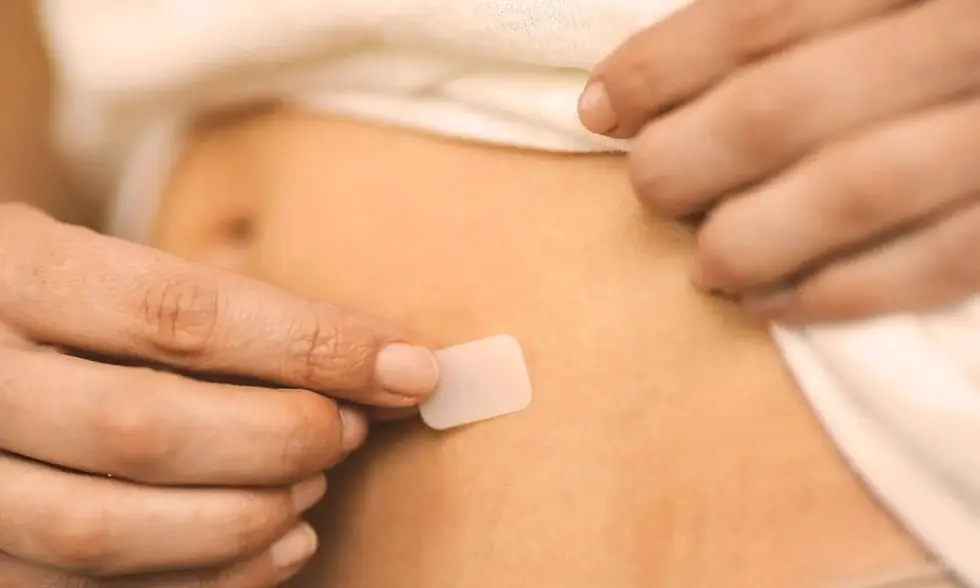
Rather than injecting synthetic HGH directly — which shuts down your own natural production and carries a heavier side-effect profile — we use growth hormone releasing peptides. These work with your pituitary gland, prompting it to release your own growth hormone in a natural, pulsatile pattern.
The two most common peptides we use at Next Phase of Health:
1. Sermorelin — A GHRH analog that stimulates your pituitary to produce more of its own growth hormone. Well-studied, gentle, and a good entry point for most men.
2. Ipamorelin / CJC-1295 — A combination that produces a stronger, more sustained GH pulse, often layered in once a baseline response to Sermorelin is established. Both are typically dosed as a small subcutaneous injection at night, timed to work with your body’s natural GH release during deep sleep.
Who Should Consider This?
Peptide therapy tends to make the most sense for men who:
• Are already on TRT but have plateaued on energy, recovery, or body composition
• Are training hard but not seeing results that match the effort
• Struggle with sleep quality despite good sleep hygiene
• Are noticing slower recovery from injuries or workouts than they used to
• Want a more complete hormone optimization plan than testosterone alone
A Fuller Approach to Men’s Hormone Health in The North Shore
At Next Phase of Health, we don’t treat testosterone in isolation. Every hormone optimization plan starts with comprehensive labs such as. testosterone, free testosterone, SHBG, estradiol, thyroid, and metabolic markers — and for the right candidates, we layer in growth hormone peptide therapy alongside TRT for a protocol that actually addresses how you sleep, recover, and feel day to day.
If you’re in Glenview, Northbrook, Wilmette, Winnetka, Deerfield, Skokie or anywhere on the North Shore and you’ve felt like your current treatment only solved part of the problem, it’s worth taking a closer look at what’s actually going on with your growth hormone axis.
We accept credit cards with unhurried appointments built around your actual biology — not a generic protocol.
Book a Consultation at Next Phase of Health
Comments